
The Aya Fertility & IVF Centre
A dedicated assisted-reproduction unit with its own embryology laboratory inside the hospital — and a consultant who stays with you from the first blood test to the first heartbeat.
Everything a fertility patient needs, in one building
Eggs, sperm and embryos are handled in our own laboratory, a few metres from the theatre where they were collected. Nothing is couriered to another facility, and nothing waits overnight for a technician to arrive.
The unit runs continuous temperature, humidity and air-quality monitoring, time-lapse embryo culture, and a double-witnessing protocol at every step where a sample changes hands. Your consultant performs your scans, your collection and your transfer — you do not meet a different doctor at each stage.
Every fertility service, under one roof
Eight services covering the whole path — investigation, treatment, the laboratory, preservation and the male side. Hover a card, or tap it on your phone, to read what each one involves.
Fertility consultation & hormone testing
Fertility consultation & hormone testing
Where every journey starts. A full history for both partners, hormone profiling (AMH, FSH, LH, thyroid, prolactin), a pelvic ultrasound and an antral follicle count. You leave the first visit knowing what we found and what the options are.
Ask about this
Ovulation induction & cycle tracking
Ovulation induction & cycle tracking
For women who ovulate irregularly or not at all. Tablets or low-dose injections encourage the ovary to release an egg, tracked by ultrasound so we know exactly when it happens. Often the first and simplest thing to try.
Ask about this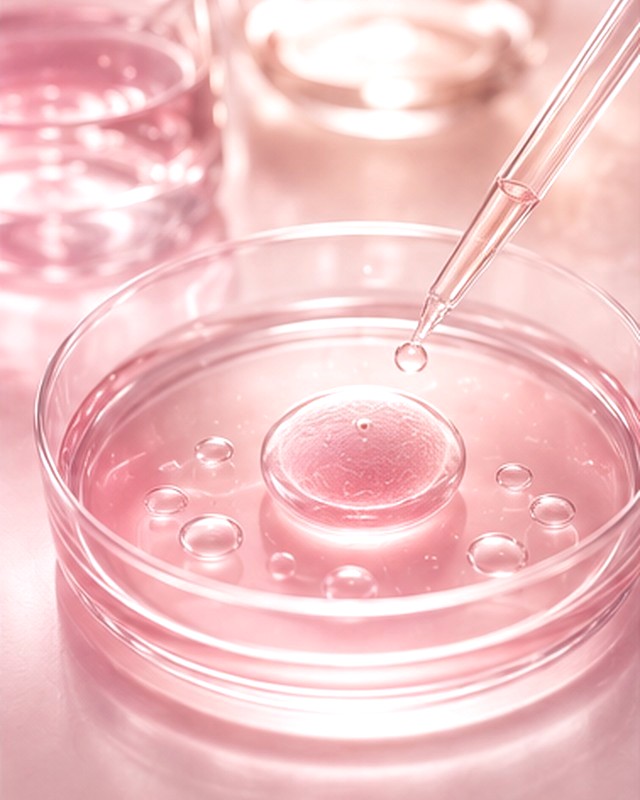
In vitro fertilisation (IVF)
In vitro fertilisation (IVF)
Eggs are collected, fertilised with sperm in our own laboratory, and the resulting embryo returned to the uterus. The full cycle takes about three weeks from the first injection to the transfer.
Ask about this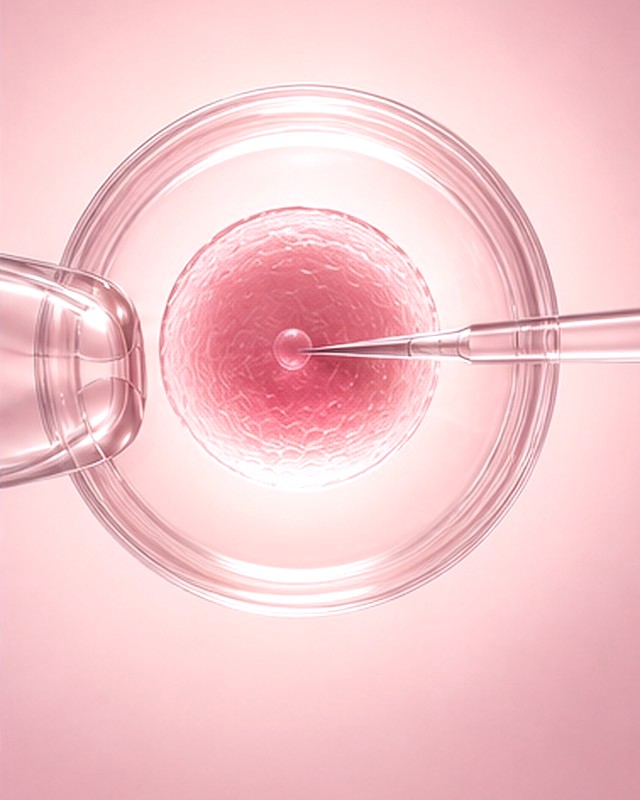
Intracytoplasmic sperm injection (ICSI)
Intracytoplasmic sperm injection (ICSI)
A single sperm injected directly into a single egg under a micromanipulator. The answer when sperm count or motility is low, when previous IVF has failed to fertilise, or when sperm has been retrieved surgically.
Ask about this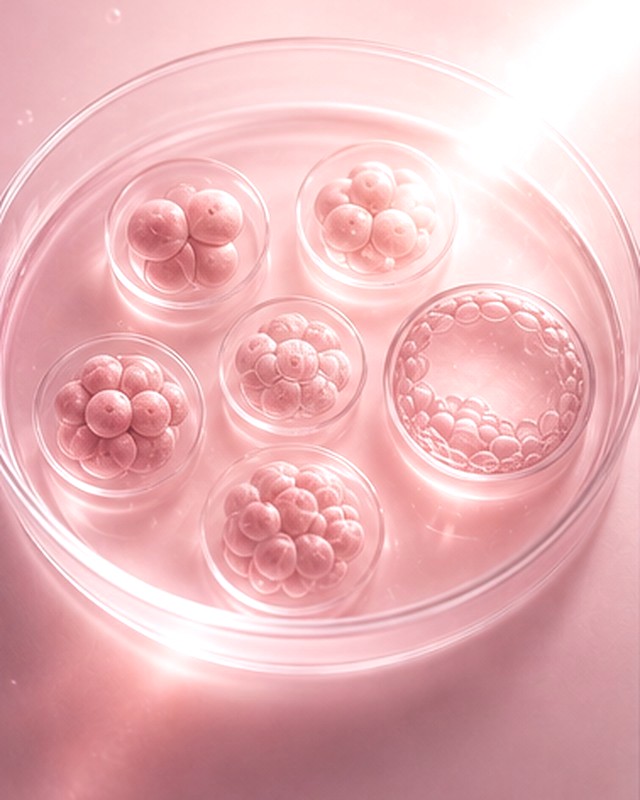
Blastocyst culture & embryo grading
Blastocyst culture & embryo grading
Embryos grown to day five, when the strongest have declared themselves. Culturing longer lets us transfer one embryo with confidence instead of two with hope — which is how we keep twin pregnancies rare.
Ask about this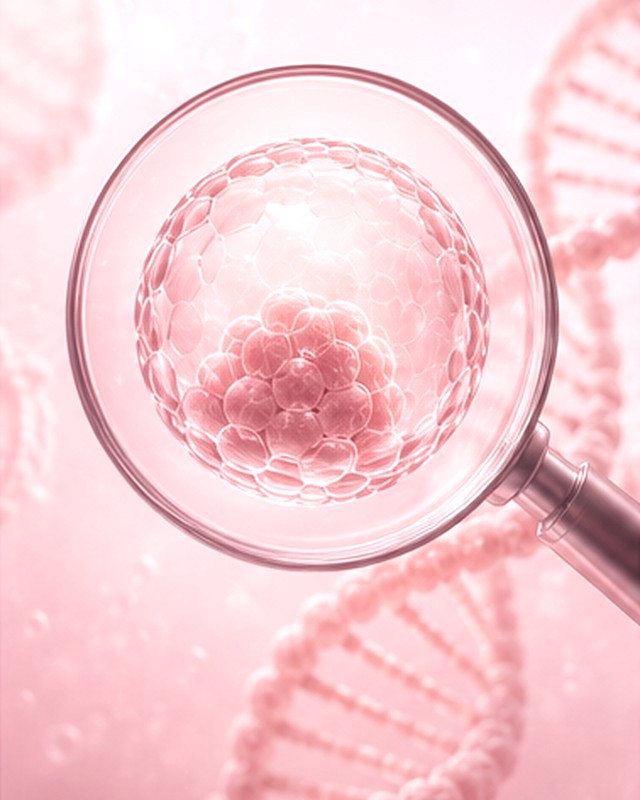
Preimplantation genetic testing (PGT)
Preimplantation genetic testing (PGT)
A few cells biopsied from a day-five embryo and tested before transfer — for chromosome number (PGT-A) or for a specific inherited condition the family carries (PGT-M). Particularly valuable after recurrent miscarriage or at older maternal age.
Ask about this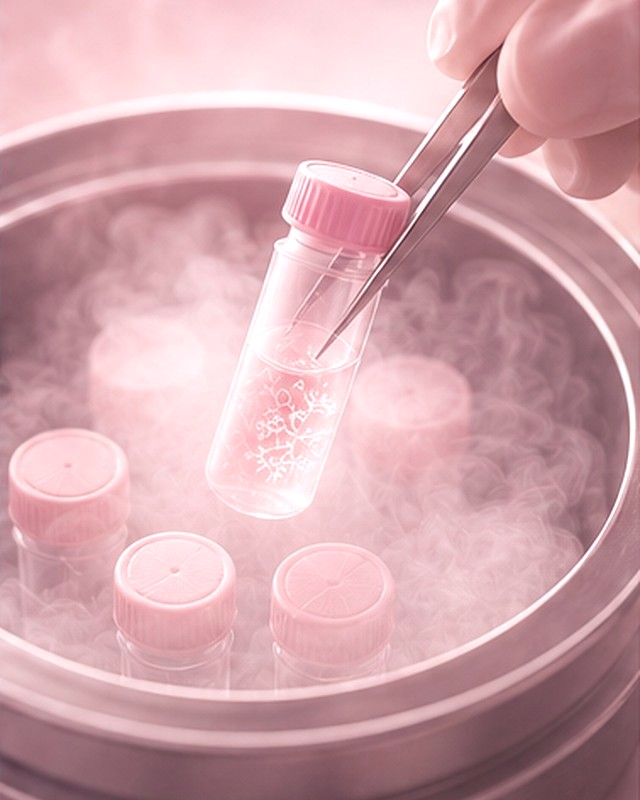
Embryo freezing & frozen transfer
Embryo freezing & frozen transfer
Surplus embryos vitrified for later — flash-frozen in seconds, which avoids the ice crystals that damaged embryos under older slow-freeze methods. A frozen transfer in a natural or lightly medicated cycle is gentler than a fresh one and, in many patients, works at least as well.
Ask about this
Male fertility evaluation & andrology
Male fertility evaluation & andrology
Semen analysis to WHO criteria, DNA fragmentation testing, hormone profiling and clinical examination. Around a third of infertility is male in origin and another third involves both partners, so we assess both from the beginning.
Ask about thisWhere the real work happens
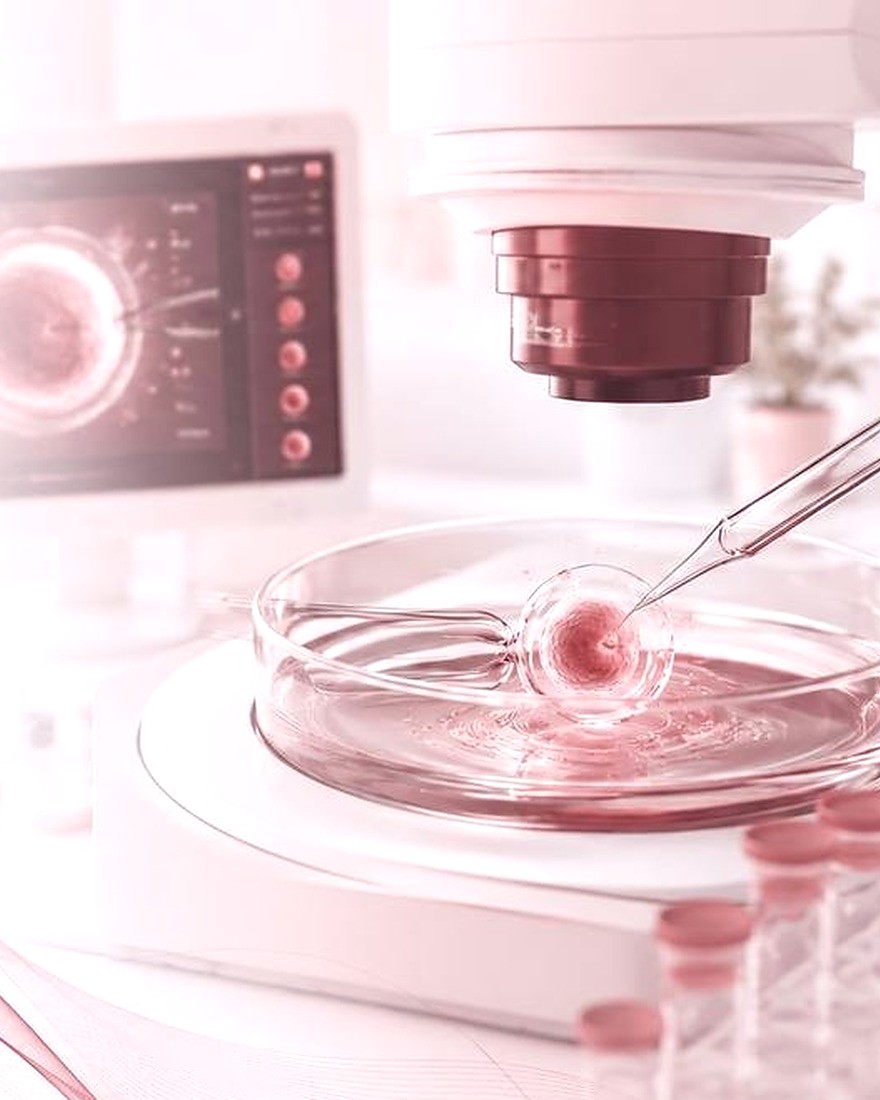
An IVF result is decided less by the consultation room than by the twenty minutes an embryologist spends at a microscope. Our laboratory is built around that fact.
- Controlled air. HEPA and VOC filtration with positive pressure, because embryos are sensitive to compounds you cannot smell.
- Continuous monitoring. Temperature, CO₂ and humidity logged around the clock with alarms that reach an embryologist's phone.
- Time-lapse culture. Embryos are photographed as they develop rather than removed from the incubator to be checked.
- Double witnessing. Two people verify identity at every transfer of a sample between vessels.
- Vitrification. Flash freezing in seconds, which is why thaw survival is now close to that of fresh material.

Tell us when suits you.
We will call to confirm.
Fill in the form and our booking team will call you back on the number you give. If it is urgent, or you are in labour, call us instead — someone answers at every hour.