Everything you need to understand your fertility journey: how treatment begins, what each step involves, and clear answers to the questions couples ask us most.
Your journey through treatment for delayed conception
Your journey at Aya Fertility & IVF Centre in Jeddah begins with a medical consultation and an assessment of the causes of delayed conception in both partners, then a treatment plan that suits you. Options may include ovulation induction, intrauterine insemination, or IVF and ICSI, according to test results and medical advice.
Assessment stages and treatment options
The first consultation
Your journey at Aya Fertility Centre begins with a consultation with the specialist doctor, who reviews the medical and reproductive history of both partners, including how long you have been trying, cycle regularity, and any previous pregnancies, surgeries or fertility treatments.
A clinical examination may be done when needed, to build a clear picture of the case and decide on the right tests before a treatment plan is set.
How to prepare for the visit
It is best for both partners to attend together for a full assessment.
Bring any tests, scans, medical reports and previous treatment records.
Prepare your questions to discuss with the doctor.
Assessment stages and treatment options
Fertility assessment for both partners
Before treatment starts, the fertility consultant carries out a full assessment of both partners to identify the possible causes of delayed conception and choose the right treatment plan.
The wife’s assessment may include fertility hormone tests such as AMH, FSH and LH, thyroid hormones and prolactin when needed, an ultrasound to assess the womb and ovaries, and a check of the fallopian tubes if the case calls for it.
The husband’s assessment includes a semen analysis, with additional hormone or genetic tests when there are medical indications.
Good to know before the tests
The tests needed are decided for each couple according to their history and assessment results.
Most first-line tests are blood tests and an ultrasound scan, and other tests may be requested.
A repeat semen analysis may be advised if results are abnormal, at the doctor’s discretion.
Assessment stages and treatment options
Your treatment plan
After reviewing the test results and the fertility assessment of both partners, the fertility consultant explains the possible causes of delayed conception and discusses the treatment options that suit each case.
The plan may start with simple steps such as lifestyle changes, treating hormonal disorders or ovulation induction, and may include intrauterine insemination or IVF and ICSI when needed. The choice depends on the assessment results, age, and the medical and reproductive history of both partners.
What does your treatment plan include?
A clear plan made for your case, with the options and alternatives explained.
A discussion of the treatment steps, expected costs and insurance coverage before you start.
Making the treatment decision together with your doctor, after the benefits, risks and expected chances of success are explained.
Assessment stages and treatment options
Ovulation induction and monitoring
Ovulation induction may be one of the first treatment options in some cases of delayed conception, especially when ovulation is disturbed. Medicines such as letrozole or hormonal treatments are used according to the doctor’s assessment, to stimulate the growth of eggs and help ovulation happen.
The fertility consultant follows the ovarian response with ultrasound, and hormone tests may be requested when needed, to time ovulation and adjust treatment in a way that protects the patient and lowers the risk of multiple pregnancy and ovarian hyperstimulation.
What does this stage include?
Choosing the right medicine and dose for the case and test results.
Following egg growth by ultrasound and timing ovulation.
Assessing the response and results to decide whether to repeat the cycle or move to another option.
Assessment stages and treatment optionsIf needed
Intrauterine insemination (IUI)
Intrauterine insemination is one of the treatment options for delayed conception in specific cases, such as some cases of unexplained delay or mild male-factor infertility, according to the fertility consultant’s assessment.
The insemination is timed to ovulation. The semen sample is prepared in the lab to select suitable sperm, then placed in the womb with a thin catheter. It is a simple procedure, usually done in the clinic without anaesthesia, and may cause mild discomfort.
Good to know about IUI
Done in the clinic within minutes, usually without anaesthesia.
Needs at least one fallopian tube that is open and working properly.
Can be done in a natural cycle or with ovulation induction, according to the treatment plan.
Assessment stages and treatment optionsIf needed
IVF and ICSI
The fertility consultant may recommend IVF or ICSI in some cases of delayed conception, such as blocked fallopian tubes, sperm problems, or previous treatments that did not work, according to the medical assessment.
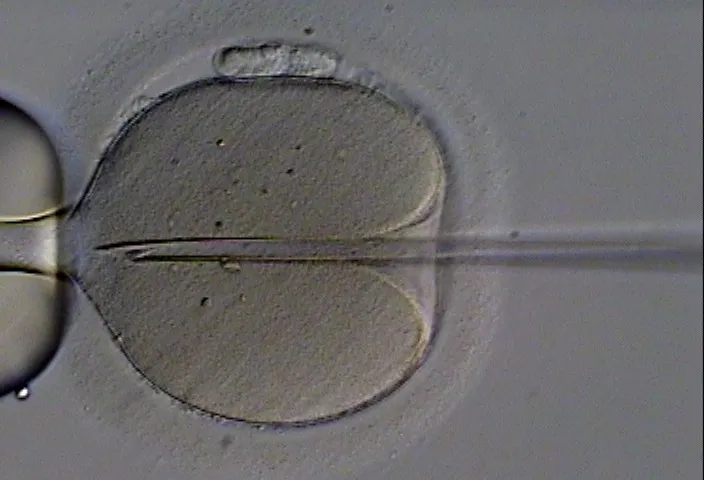
A cycle usually starts with ovarian stimulation and ultrasound monitoring of egg growth, then egg collection under suitable anaesthesia or sedation. The eggs are then fertilised in the embryology lab, either by conventional IVF or by ICSI, where one sperm is injected into each mature egg suitable for injection.
The medical team decides the most suitable method and the timing of embryo transfer or freezing according to the assessment and how the embryos develop.
What to expect during treatment
Following egg growth and timing the collection according to the ovarian response.
Egg collection is a relatively short procedure, with monitoring after anaesthesia or sedation until you are ready to leave.
Following embryo development in the lab, with the medical team explaining the results and next steps.
Assessment stages and treatment optionsIf needed
Following embryos in the lab
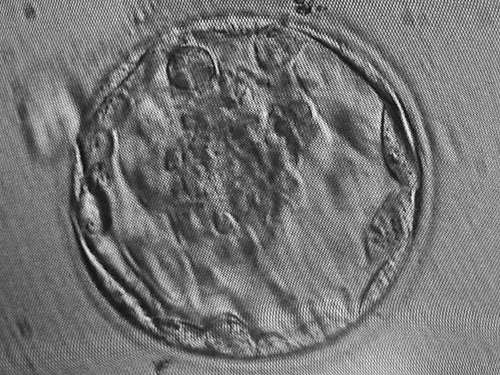
After the eggs are fertilised, embryologists follow their development in the Aya centre’s lab, from the first cell divisions to the blastocyst stage, which an embryo may reach on day five or six.
Embryos are graded by their stage of growth and lab features, to help choose suitable embryos for transfer or freezing. In specific medical cases, preimplantation genetic testing (PGT) may be recommended, after its reasons and limits are discussed with the doctor.
Suitable embryos can be frozen for use in a later treatment cycle, according to the treatment plan and assessment results.
What happens at this stage?
Following embryo development and updating the couple through the centre’s approved way of communicating.
Grading embryos to help decide on transfer or freezing, without any guarantee of pregnancy.
Discussing genetic testing or embryo freezing when there are suitable medical reasons.
Assessment stages and treatment optionsIf needed
Embryo transfer and pregnancy test
After the embryos are graded and a suitable one is chosen, it is placed in the womb with a thin catheter, in a short procedure that usually needs no anaesthesia. In many cases a single embryo is preferred to lower the risk of multiple pregnancy, according to the doctor’s assessment and your medical situation.
After the transfer you can usually return to your normal daily activities, while following your medicines and the medical team’s instructions. The blood pregnancy test (Beta-hCG) is scheduled, usually about 10 to 14 days after the transfer, depending on the embryo stage and treatment protocol.
What happens after the transfer?
Transferring the suitable embryo according to the plan, keeping the risk of multiple pregnancy low.
Returning to normal daily activities, avoiding strenuous effort and following the doctor’s instructions.
Having the blood pregnancy test on the set date, and continuing the prescribed medicines until the doctor advises otherwise.
Each embryo is watched from the moment of fertilisation until it becomes a blastocyst, ready for transfer.
Day 0Egg and sperm
Day 1Fertilised (2PN)
Day 24 cells
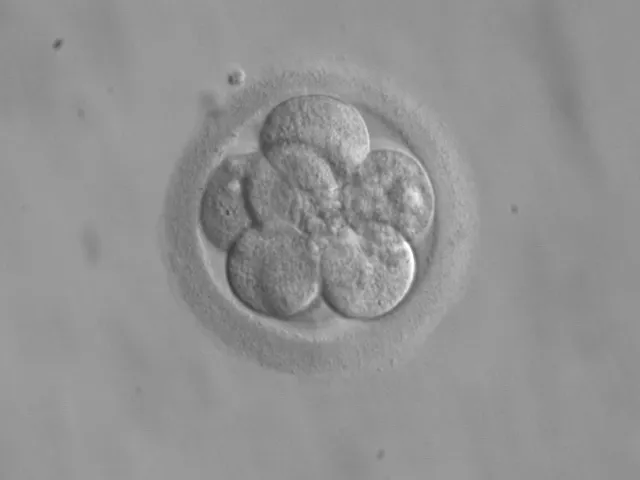
Day 38 cells
Day 4Morula
Day 5Blastocyst
The embryology lab
What do embryos look like under the microscope?
Real images from fertility laboratories, for information and education only. Embryos differ from case to case; your doctor and embryologist assess your own case.
ICSI: the holding pipette and the fine needle at the eggEugene Ermolovich (CRMI), CC BY-SA 3.0An eight-cell embryo at the cleavage stageekem, courtesy of the RWJMS IVF Program, public domainA blastocyst: a fluid-filled cavity and an inner cell massHarimiao, CC BY-SA 3.0Different degrees of fragmentation in cleavage-stage embryos, assessed as part of embryo gradingCecchele A. et al., CC BY 4.0
Source: Wikimedia Commons (commons.wikimedia.org). Rights belong to their authors under the licences shown.
Patient library
Understand every part of the journey
Choose a topic to read. Every answer is written by our team in plain language and follows international fertility guidelines.
No topic matches that search. Try another word, or call us on 920012342.
This guide is general education about fertility treatment, not medical advice for your own case. Your consultant will plan your treatment from your history, results and examination.
Book a visit
Book in a minute
Choose the reason and the time that suits you, and we’ll send your request to the booking team on WhatsApp. They’ll call you to confirm.